Microblading FAQ: Does It Hurt, How Long Does It Last & Is It Worth It?

Let’s talk eyebrows, because a good brow can completely transform your makeup look! Whether you spent your teenage years overplucking your eyebrows (guilty!) or you’re simply tired of filling them in every single morning, achieving those perfectly shaped, natural-looking brows can feel like a full-time job. And while I love a good eyebrow pencil, sometimes a girl just wants to wake up with beautiful brows already in place. Enter microblading! This popular semi-permanent eyebrow treatment promises fuller-looking, more defined brows without the daily makeup routine. But does microblading hurt? How long does it last? And is it actually worth the investment? Today, I’m answering some of the most common microblading questions and sharing my personal experience getting my eyebrows microbladed, including the procedure, pain level, healing process and results.
What Is Microblading and How Does It Work?
Microblading is a form of cosmetic tattooing that uses a handheld tool fitted with tiny needles to create fine, hair-like strokes in the eyebrow area. Pigment is implanted into the skin to mimic the appearance of natural eyebrow hairs, helping brows look fuller, more symmetrical and better defined. Unlike traditional eyebrow makeup, which washes off at the end of the day, microblading results can remain visible for many months or longer. Microblading is often described as semi-permanent, but it’s important to understand that it is still a tattooing procedure. Pigment is placed into the skin, and some colour may remain even after the original results have faded. The finished appearance depends on your natural eyebrows, skin type, chosen pigment, healing process and the experience of your technician.
Who Should Perform Your Microblading?
Choosing the right microblading artist is one of the most important parts of the entire process. After all, we’re talking about your face, girlfriend! Before booking an appointment, look for someone who meets your local licensing or registration requirements, has appropriate training in cosmetic tattooing, follows strict infection-control practices and has a portfolio of healed results. Don’t just look at freshly microbladed eyebrows on Instagram. Ask to see photos taken several weeks or months after healing, since freshly applied pigment can look very different from the final result. You’ll also want to make sure the studio uses sterile, single-use needles and follows proper hygiene procedures.
For my microblading experience, I visited Marina at Magda’s Skin Care Clinic. Marina holds a microblading certificate, specializing in the PhiBrows technique and has trained in Europe under microblading educator Branko Babic. She also has an extensive portfolio of previous eyebrow treatments, which helped me feel comfortable moving forward. One thing I especially appreciated was how thoroughly Marina explained the procedure before we started.
How Long Does a Microblading Appointment Take?
A microblading appointment typically takes around two to three hours, although the exact timing depends on the technician and the treatment being performed. My original appointment lasted approximately an hour and a half, and a good portion of that time was spent preparing and mapping my brows rather than actually microblading them. During my appointment, Marina began by explaining the procedure and applying a topical numbing product. We then discussed my ideal eyebrow shape, and she carefully mapped out where my new brows would sit.
How Are Eyebrows Shaped Before Microblading?
Before the actual microblading begins, your technician will usually map out the shape of your eyebrows. This step helps determine where your brows should start, arch and end based on your facial features and preferences. During my appointment, Marina used a Fibonacci gauge to help measure and outline my brows. This tool is commonly used in eyebrow mapping to guide proportions and symmetry.


She also used a Phi brow-mapping app to assess the shape and placement of my eyebrows. I thought this part of the appointment was seriously cool! Seeing the measurements and proposed shape made the process feel much more personalized. One thing worth remembering is that perfectly identical eyebrows aren’t always the goal. Our faces naturally have slight differences from one side to the other, and a skilled technician should aim for brows that look balanced and flattering rather than forcing identical shapes. Before beginning the procedure, Marina showed me the proposed shape so I could request any adjustments. Being able to see my brows beforehand helped ease my nerves considerably.

Does Microblading Hurt?
Okay, let’s answer the question everyone wants to know: Does microblading hurt? In my experience, microblading was uncomfortable, but manageable. I’d compare the sensation to having my eyebrows waxed, although the feeling is a little different because the technician is making multiple tiny strokes in the skin. During my appointment, Marina used a topical numbing product to help reduce discomfort. I could still feel parts of the procedure, particularly when pigment was being worked into the treated area, but it wasn’t unbearable for me. Of course, everyone’s pain tolerance is different. Some people describe microblading as scratching or stinging, while others find it more uncomfortable. The numbing method, treatment area and individual sensitivity can all affect how the procedure feels. If you’re nervous about pain, talk to your technician beforehand about what to expect and which numbing products are appropriate. Don’t apply your own numbing cream without professional guidance.
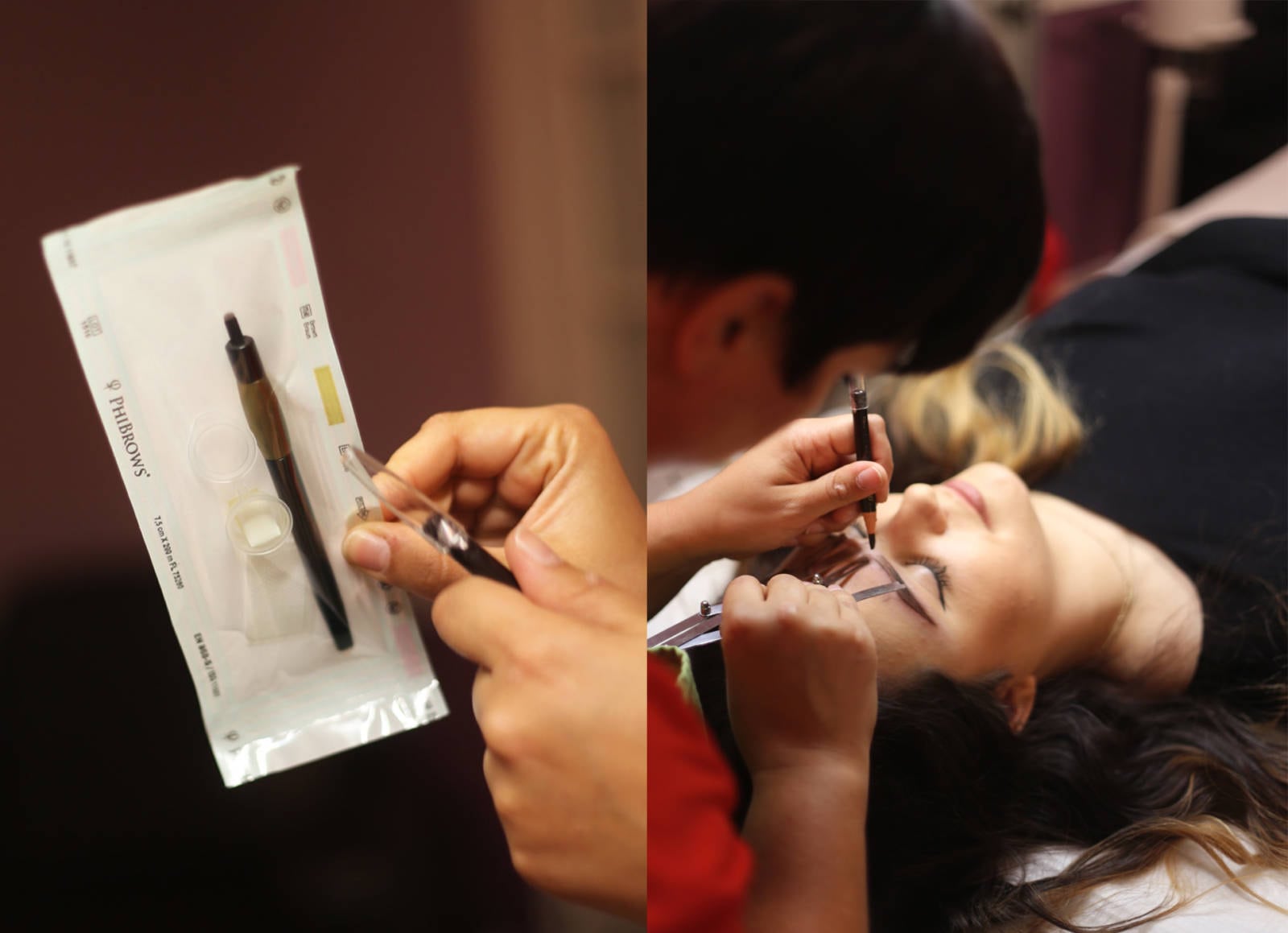

Next, it was time to use the micro blade to create my eyebrows! Marina used the microblading tool above to create small incisions in my eyebrows. The process was uncomfortable, but not unbearable. I would compare it to the discomfort felt when getting your eyebrows waxed. After making the incisions, she rubbed the ink into my skin with the brush on the other end of the micro-blading tool. This process stung a bit, but it wasn’t anything I couldn’t handle.

What Do Eyebrows Look Like Immediately After Microblading?
One thing that surprises many people is how dark their eyebrows can look immediately after microblading. Freshly applied pigment often appears bolder and more defined than the eventual healed result. I was pleasantly surprised by how my eyebrows looked after my first appointment! The shape was much more defined, and I loved not having to spend as much time filling them in. Keep in mind that freshly microbladed brows aren’t the final result. During healing, the colour and appearance can change as the skin recovers. Your technician should explain the expected healing stages and when to evaluate the finished colour.

How Long Does Microblading Last?
One of the most frequently asked questions about microblading is how long the results actually last. Generally, microblading may remain visible for around one to three years, although results vary considerably from person to person. Factors that can affect how long microblading lasts include your skin type, pigment, sun exposure, skincare products, healing response and the depth and technique of pigment placement. For example, people with oily skin may notice that their microblading fades or loses definition differently from people with drier skin. Regular exposure to sunlight can also affect pigment appearance over time. While microblading is often marketed as semi-permanent, it’s important to remember that some pigment can remain in the skin for years. Fading isn’t always even, and removal or correction can be difficult.
What Is the Microblading Healing Process Like?
The healing process is one of the most important things to understand before getting your eyebrows microbladed. Because the procedure involves creating tiny wounds in the skin, your brows need time to recover. During the first several days, it’s common for the treated area to feel tender and appear darker than expected. Mild flaking or scabbing can occur as the skin heals, and the pigment may appear lighter or uneven before the final result becomes clearer. The surface of the skin often improves over the first couple of weeks, but the complete healing and colour-settling process can take approximately four to six weeks or longer. The most important rule? Follow the aftercare instructions provided by your qualified technician. Don’t pick at scabs or peeling skin, and avoid applying unapproved products to the treated area. If you notice increasing redness, spreading swelling, worsening pain, pus, fever or other signs of infection, contact a healthcare professional promptly.
What Is the Best Microblading Aftercare Routine?
Microblading aftercare can vary depending on the technique, pigment and professional guidance provided during your appointment. Some technicians recommend specific cleansing and moisturizing routines, while others use different protocols.
For a safer healing experience, keep these general principles in mind:
- Follow the written aftercare instructions provided by your technician.
- Keep the treated area clean according to those instructions.
- Avoid picking, scratching or peeling healing skin.
- Don’t apply makeup or unapproved skincare products directly over healing brows.
- Avoid activities that could irritate or contaminate the treated skin during the initial healing period.
- Ask your technician when it’s safe to resume your usual exfoliating products, retinoids and brow makeup.
Once your skin has fully healed, protecting the eyebrow area from excessive sun exposure can help maintain the appearance of your results.
How Many Microblading Appointments Do You Need?
Most microblading treatments involve an initial appointment followed by at least one assessment or touch-up appointment after the skin has healed. The timing varies, but follow-ups are commonly scheduled around six to eight weeks after the first session. During my experience at Magda’s Skin Care Clinic, I returned for additional appointments because my skin didn’t retain the pigment as strongly as I’d hoped. I have oily skin, and I noticed that the colour faded quite a bit during healing. It ultimately took three follow-up appointments for me to achieve the appearance I wanted. Not everyone needs that many appointments, though! Your technician should explain what’s included in the original price, when touch-ups may be appropriate and whether additional sessions are recommended. I also suggest asking about touch-up pricing before booking, since policies and fees vary between studios.
Is Microblading Good for Oily Skin?
Yes, people with oily skin can get microblading, but the results may be less crisp or may fade differently compared with some other skin types. Excess oil can affect how defined the individual hair-like strokes appear as the pigment heals. I experienced this firsthand! Because my skin is naturally oily, I needed additional touch-ups to achieve the colour and definition I wanted. If you have very oily skin, ask your technician whether microblading or another cosmetic tattoo technique, such as powder brows, might be better suited to your goals.
Can Microblading Look Natural?
Absolutely! Natural-looking results are one of the biggest reasons people consider microblading in the first place. The technique is designed to mimic individual eyebrow hairs rather than create one solid block of colour. However, the final appearance depends heavily on your technician’s skill, your skin type, pigment selection and the shape you choose. My advice? Bring inspiration photos to your consultation, but stay open to recommendations based on your natural brow shape and facial features. I personally love brows that look full and defined without appearing overly harsh.
What Eyebrow Colour Should You Choose for Microblading?
Choosing the right pigment colour is just as important as choosing the right eyebrow shape. Your technician should consider your natural brow hair, skin undertone, overall colouring and desired finish. While darker brows can create beautiful definition, you don’t necessarily need to choose a shade darker than your hair. A natural-looking result often comes from selecting a pigment that complements your features rather than following a one-size-fits-all rule. Keep in mind that freshly microbladed eyebrows can appear darker than the healed result. Ask your technician to explain how the pigment is expected to settle and what colour changes are possible over time.
Is Microblading Safe?
Microblading can be performed with appropriate precautions, but it isn’t risk-free. Because the procedure breaks the skin, possible complications include infection, allergic reactions, scarring, pigment changes and results that don’t heal as expected. It’s especially important to discuss your medical history, allergies, skin conditions and medications with a qualified professional before treatment. Certain health conditions or treatments may affect whether microblading is appropriate for you. Make sure your technician uses sterile, single-use equipment, follows local public health requirements and provides clear aftercare instructions. If you have a history of allergic reactions or sensitive skin, ask about pigment ingredients and whether a medical consultation is appropriate. Remember, microblading is a cosmetic tattoo, not simply a longer-lasting eyebrow makeup product. It’s worth taking the time to understand the potential risks before booking.
My Microblading Journey:

If you’re interested in learning more about the clinic where I originally had my eyebrows microbladed, Magda’s Skin Care Clinic also offered other skincare and cosmetic treatments at the time of my visit. You can explore its Facebook page and Yelp listing for additional information. Be sure to confirm current services, credentials and availability directly with the clinic.
Thank you to Magda’s Skin Care Clinic for providing my original microblading services. As usual, all opinions are my own.